

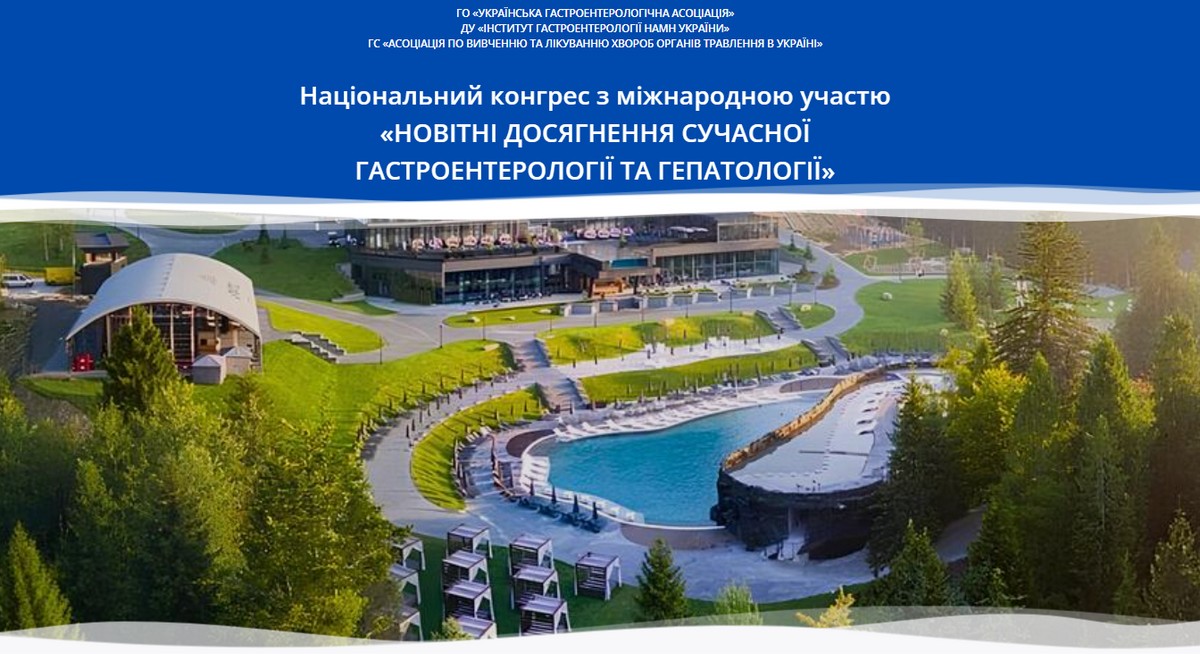
On September 23–25, 2026, the National Congress with International Participation “Latest Advances in Modern Gastroenterology and Hepatology” was held in Skhidnytsia. One of the most significant professional events for Ukrainian gastroenterologists and hepatologists, it brought together about 200 physicians on site and more than 1,500 participants online.
Key points
- One of the key topics was the role of oxidative stress in the development and progression of liver diseases.
- Disruption of redox homeostasis can sustain inflammation and contribute to the development of liver fibrosis.
- The modern approach involves targeting not only the cause of the disease but also the mechanisms of cell damage.
- Glutathione is one of the main components of the endogenous antioxidant defense of hepatocytes.
- Hepaval® and Hepaval® ASN (L-glutathione + astaxanthin) were presented.
The congress program covered modern approaches to the diagnosis and treatment of digestive diseases, current issues in hepatology and new options for the therapeutic correction of pathological processes in the liver.
Valartin Pharma was one of the congress partners, supporting professional exchange of experience and an educational initiative aimed at bringing modern scientific approaches into clinical practice.
Liver redox homeostasis and oxidative alteration
One of the topics that attracted particular attention from participants was the role of oxidative stress in the development and progression of liver diseases. This issue was the subject of the presentation “Liver redox homeostasis and oxidative alteration: clinical consequences and therapeutic correction” by Volodymyr Cherniavskyi, Doctor of Medical Sciences, Professor at the Department of Internal Medicine No. 1 of Bogomolets National Medical University and member of the European Association for the Study of the Liver (EASL).
The presentation focused on the disruption of redox homeostasis — the balance between oxidation processes and antioxidant defense in cells. In pathological conditions, excessive production of reactive oxygen species can lead to oxidative damage of cellular structures, sustain inflammation and contribute to further progression of liver injury.
Professor Cherniavskyi described oxidative alteration as one of the important mechanisms of hepatocyte damage. In the setting of a chronic pathological process, redox imbalance can sustain the inflammatory response and create conditions for further structural remodeling of liver tissue, including the development of fibrosis.
The modern approach to patient management requires targeting not only the etiological factor of the disease but also the mechanisms that sustain cell damage.
One such direction is supporting the body’s own antioxidant systems.
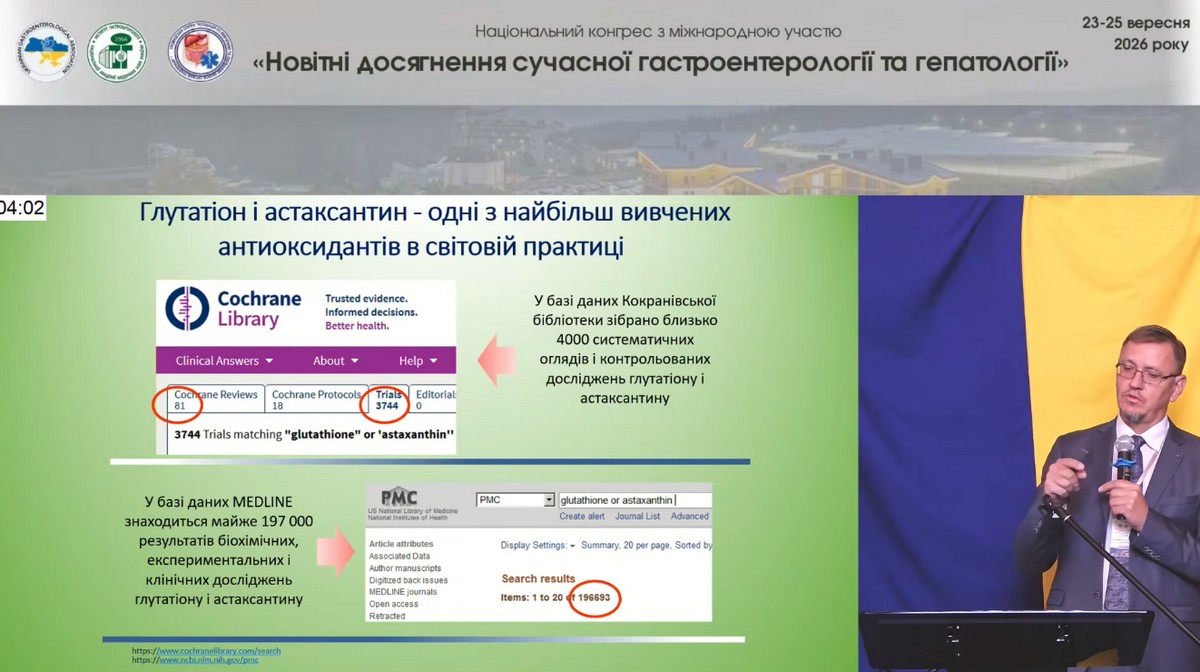
Glutathione: the foundation of antioxidant defense
An important part of the presentation was devoted to glutathione, one of the main components of the endogenous antioxidant defense system. Glutathione is involved in maintaining intracellular redox balance, neutralizing reactive oxygen species and other oxidized compounds, and in cellular detoxification. This is why the glutathione system is essential for the ability of hepatocytes to counteract oxidative damage.
Professor Cherniavskyi also emphasized the importance of a balanced approach to correcting oxidative stress. Antioxidant therapy requires consideration of the mechanisms of action of individual substances, their doses and the physiological role of redox processes, which are involved not only in oxidative damage but also in normal cell signaling.
In this context, Hepaval®, a glutathione-based product, was presented.
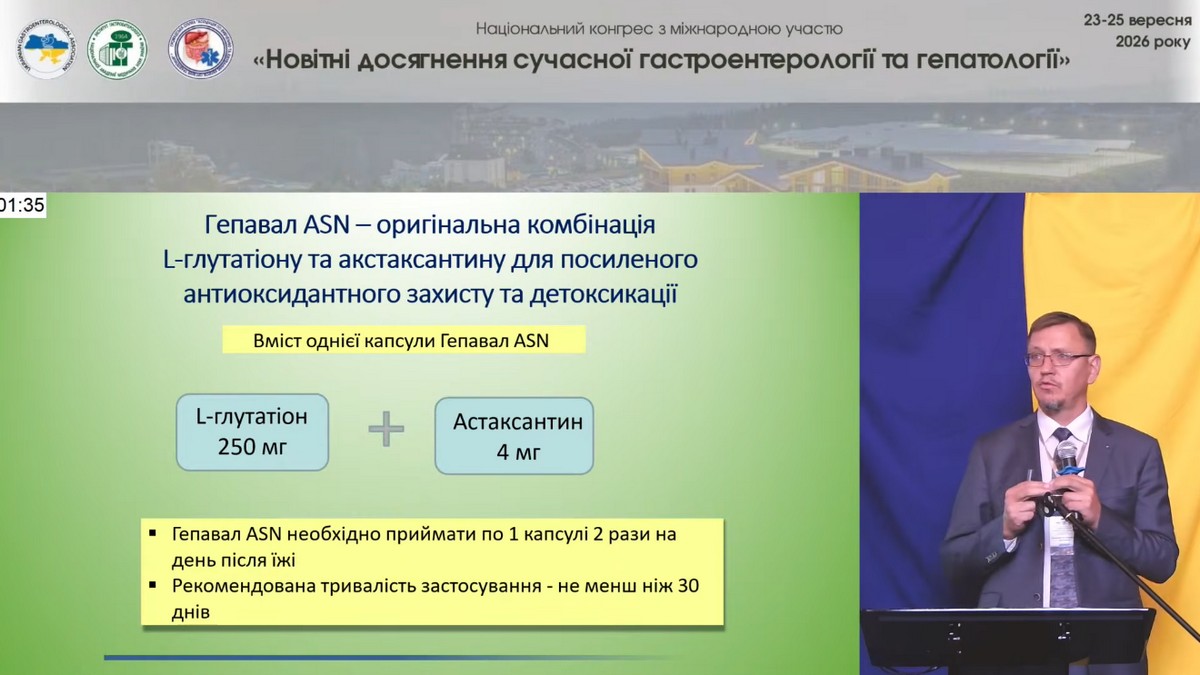
Professor Cherniavskyi paid special attention to the combined formula Hepaval® ASN, which brings together two components with antioxidant properties:
- L-glutathione — a key component of the intracellular antioxidant defense system;
- astaxanthin — a carotenoid from the xanthophyll group with antioxidant properties, capable of interacting with the lipid components of cell membranes.
The combination of glutathione and astaxanthin provides comprehensive support for antioxidant defense and may be relevant for patients who need enhanced support of redox homeostasis in the setting of pathological processes or drug burden.
Practical aspects
The practical part of the presentation attracted considerable interest among congress participants. Professor Cherniavskyi presented options for using antioxidant support as part of a comprehensive approach to managing patients with liver diseases, emphasizing the need to consider the pathogenetic mechanisms of disease development and progression.
Valartin Pharma’s participation in the National Congress with International Participation “Latest Advances in Modern Gastroenterology and Hepatology” continues its systematic support for professional medical education and scientific dialogue with physicians.
Valartin Pharma continues to support scientific and educational initiatives aimed at developing evidence-based medicine, improving physicians’ clinical competence and introducing modern approaches into gastroenterology and hepatology practice.
Valartin Pharma — The Art of Creating Health.
27 September 2026