



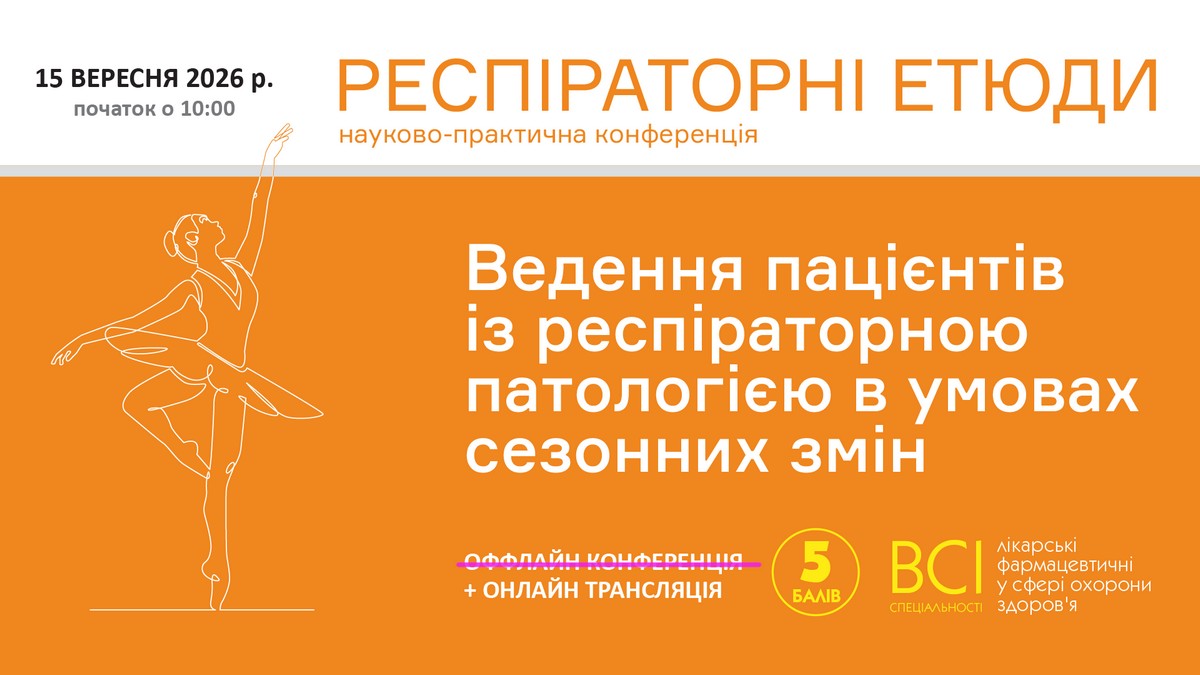
On September 15, 2026, the online scientific and practical conference “RESPIRATORY ETUDES. Management of Patients with Respiratory Diseases During Seasonal Changes” was held, with Valartin Pharma as one of its partners.
Key points
- The central topic was the management of patients with seasonal allergic rhinitis at the peak of the ragweed season.
- Approaches to diagnosis and treatment were reviewed in line with ICAR 2023 and ARIA-EAACI 2024–2025.
- Nasal saline solutions have a high level of evidence and are recommended as a basic component of therapy.
- Nasomer® was presented — a spray based on sea water, hyaluronic acid and D-panthenol.
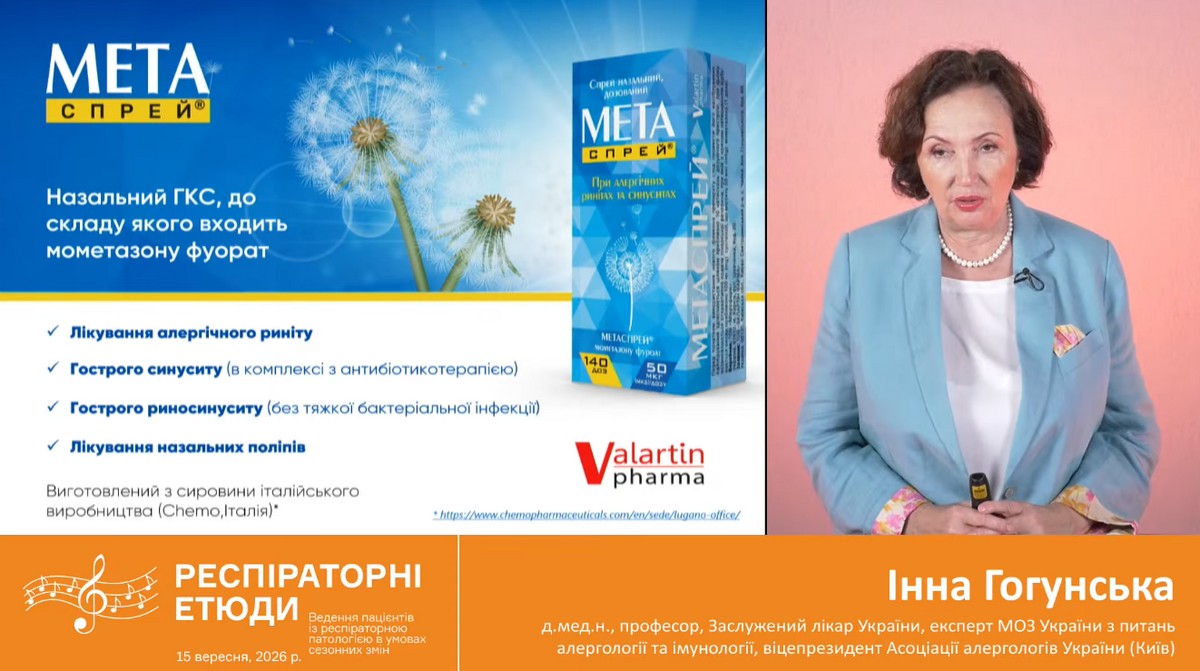
- Among intranasal corticosteroids, special attention was paid to mometasone furoate — the product Metaspray®.
Since the conference took place at the peak of the ragweed season, one of its most relevant topics was the management of patients with seasonal allergic rhinitis. In particular, Inna Hohunska, Doctor of Medical Sciences, leading researcher at the Center for Allergic Diseases of the Upper Respiratory Tract of the State Institution “Prof. O.S. Kolomiichenko Institute of Otolaryngology of the National Academy of Medical Sciences of Ukraine”, in her presentation “Pharmacological and non-pharmacological management of allergic rhinitis”, focused on current approaches to the diagnosis, classification and treatment of allergic rhinitis in line with the international guidelines ICAR 2023 and ARIA-EAACI 2024–2025.
Allergic rhinitis: more than local symptoms
Allergic rhinitis remains one of the most common diseases. According to the data presented, its prevalence is 10–30% among adults and may reach 40% among children. At the same time, a significant proportion of cases remain undiagnosed or insufficiently controlled.
The burden of allergic rhinitis goes far beyond local symptoms. The disease can negatively affect sleep quality, cognitive function, work capacity and the patient’s daily activities. Particular emphasis was placed on the “united airway” concept, which explains the relationship between allergic rhinitis and other respiratory diseases, including bronchial asthma and rhinosinusitis.
Non-pharmacological treatment: irrigation therapy
An important part of Dr. Hohunska’s presentation was devoted to non-pharmacological treatment methods, in particular irrigation therapy. Cleansing the nasal mucosa of allergens, excess secretions and other particles helps maintain its physiological state and can be an important component of the comprehensive management of patients with allergic rhinitis.
According to the data presented, the use of nasal saline solutions has a high level of evidence and is recommended as a basic component of patient management. The differences between isotonic and slightly hypertonic solutions were also discussed, as well as the advantages of sea water, which, unlike a simple sodium chloride solution, contains a range of minerals. Another important aspect of using saline solutions is supporting the mucosa when it is dry and irritated, which can accompany both allergic rhinitis itself and its drug therapy.
In this context, Nasomer® was presented — a nasal spray based on sea water, hyaluronic acid and D-panthenol, made in Germany. This combination of ingredients is designed to cleanse and moisturize the nasal mucosa and to support its physiological state and natural repair mechanisms. In the comprehensive management of allergic rhinitis, Nasomer® is used as part of elimination therapy to reduce mucosal contact with allergens and to support its protective functions.
Pharmacological therapy: intranasal corticosteroids
Pharmacological therapy for allergic rhinitis also includes intranasal corticosteroids. Dr. Hohunska paid special attention to mometasone furoate — a drug with local anti-inflammatory action that is widely used to control the symptoms of allergic rhinitis in line with current clinical guidelines.
Mometasone helps reduce inflammation and swelling of the mucosa, which makes it possible to control the main manifestations of the disease — nasal congestion, sneezing, itching and rhinorrhea.
Among mometasone-based medicines on the Ukrainian pharmaceutical market is Metaspray® by Valartin Pharma. Metaspray® is made from high-quality Italian raw materials. The 140-dose bottle is convenient to use and can be a practical solution for long-term control of allergic rhinitis symptoms.
Modern management of a patient with allergic rhinitis combines pharmacological and non-pharmacological approaches aimed both at controlling inflammation and symptoms and at supporting the physiological state of the nasal mucosa.
Valartin Pharma continues to support scientific and educational initiatives aimed at implementing the principles of evidence-based medicine, improving physicians’ clinical competence and developing interdisciplinary collaboration within Ukraine’s medical community.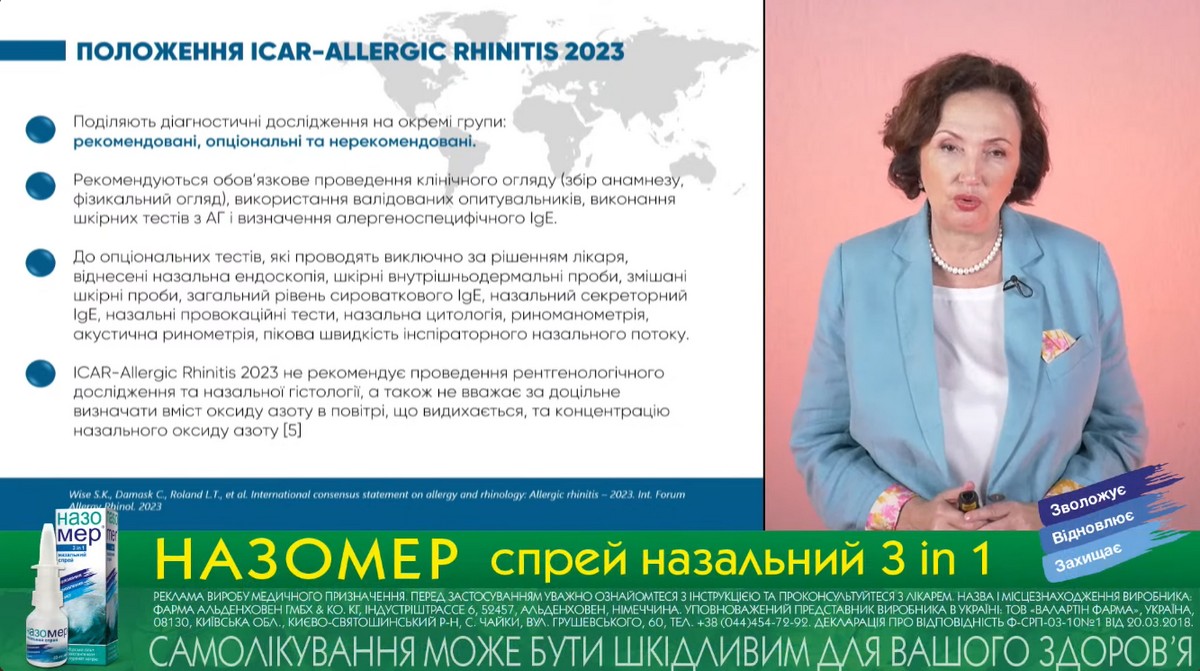
Valartin Pharma — The Art of Creating Health.
18 September 2026