

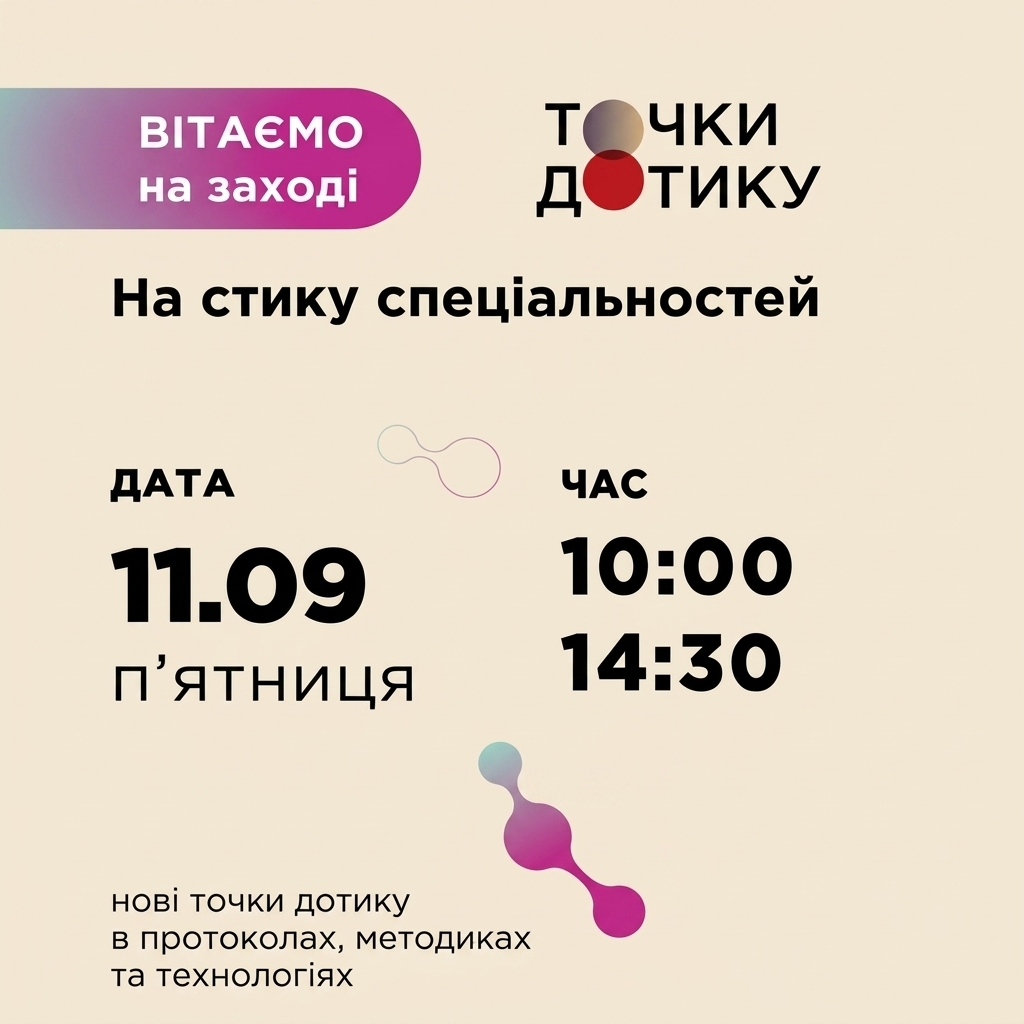
On September 11, 2026, an online conference was held as part of the series of innovative events for physicians “POINTS OF CONTACT. At the Intersection of Specialties”, organized by the NGO “Independent Association of Dermatovenereologists and Cosmetologists”.
Key points
- The central topic was the gut–liver–skin axis and its role in the development of dermatological manifestations.
- Skin changes may reflect subclinical systemic inflammation and metabolic disorders.
- A comprehensive examination was proposed to identify internal causes of dermatological syndromes.
- Antioxidant liver support with glutathione-based products — Hepaval® and Hepaval® ASN — was discussed.
The event brought together leading experts in dermatology, allergology, internal medicine and related specialties. The focus was on current interdisciplinary issues in the pathogenesis, diagnosis and treatment of chronic dermatological and allergic diseases.
Valartin Pharma was one of the conference partners, supporting an educational initiative aimed at developing an interdisciplinary approach and clinical thinking, and at bringing the principles of evidence-based medicine into physicians’ everyday practice.
The liver–skin axis: scientific evidence and practical conclusions
One of the central topics of the event was the role of the liver in shaping systemic changes that can provoke skin reactions. The relationship between liver function and dermatological diseases was the key topic of the presentation “Interaction along the liver–skin axis: scientific evidence and practical conclusions” by Volodymyr Cherniavskyi, MD, PhD, DSc, Professor at the Department of Internal Medicine No. 1 of Bogomolets National Medical University and member of the European Association for the Study of the Liver (EASL).
However, Professor Cherniavskyi did not limit his presentation to the liver–skin relationship, offering instead an extended review of the gut–liver–skin axis. Particular attention was paid to how metabolic and immune processes affect the condition of the skin.
The liver performs hundreds of biochemical functions, among which the metabolism and neutralization of various substances, including exogenous compounds, play an important role. At the same time, there is a close biochemical and immune relationship between the gut, the liver and the skin.
Therefore, when assessing patients with certain dermatological manifestations, it is important to consider not only local skin changes but also possible systemic factors.
In this context, Professor Cherniavskyi highlighted the role of subclinical systemic inflammation and metabolic disorders, which may accompany pathological processes in the liver and manifest as nonspecific skin changes.
A comprehensive approach to examination
To search for possible internal causes of dermatological syndromes, a comprehensive approach to patient examination was proposed, including:
- complete blood count and blood biochemistry;
- lipid profile;
- glucose and C-reactive protein levels;
- anti-tissue transglutaminase antibodies;
- abdominal ultrasound.
Antioxidant liver support
The practical part of the presentation was devoted to options for supporting liver function and antioxidant protection. In particular, Professor Cherniavskyi discussed the use of glutathione-based products — Hepaval® and Hepaval® ASN. Glutathione is an important component of the body’s endogenous antioxidant and detoxification system: it is involved in neutralizing free radicals and maintaining cellular redox balance.
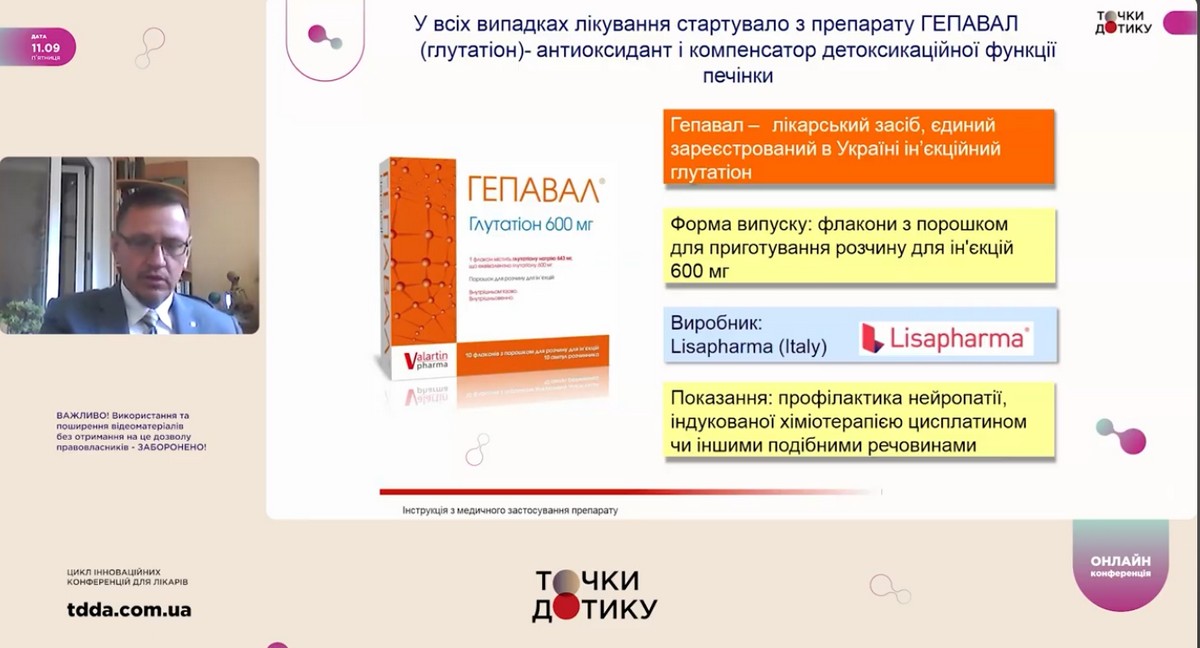
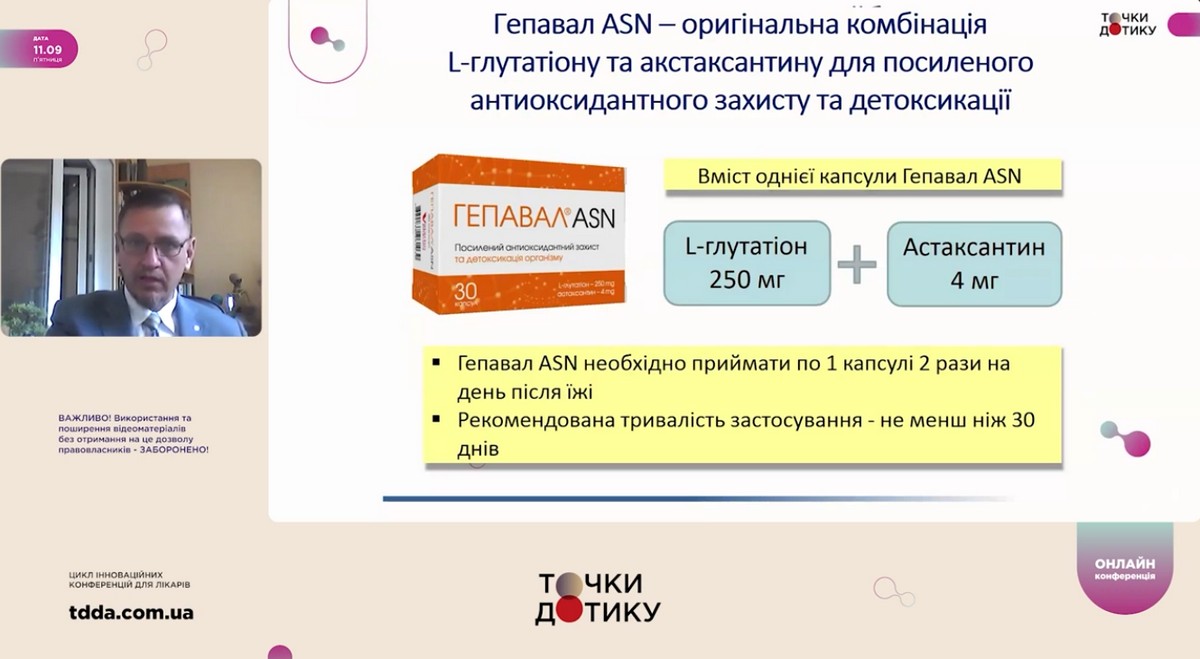
Professor Cherniavskyi paid special attention to Hepaval® ASN, which contains:
- L-glutathione — an important component of the cellular antioxidant protection and detoxification system;
- Astaxanthin — an antioxidant from the xanthophyll group, capable of interacting with components of cell membranes.
According to the speaker, the combination of glutathione and astaxanthin makes it possible to act comprehensively on the mechanisms of oxidative stress and may be relevant in situations where additional antioxidant support is needed, particularly during pharmacotherapy.
Interdisciplinary dialogue
Participants also showed interest in the approaches presented by Professor Cherniavskyi for using these products in inpatient and outpatient settings. The lively discussion confirmed the importance of interdisciplinary collaboration, since assessing liver function and metabolic processes may be relevant not only for gastroenterologists but also for dermatologists, allergists and physicians of other specialties.
Valartin Pharma’s participation in the “POINTS OF CONTACT. At the Intersection of Specialties” conference continues its support for educational projects that help bring together knowledge from different fields of medicine and translate modern scientific approaches into everyday clinical practice.
Valartin Pharma — The Art of Creating Health.
13 September 2026